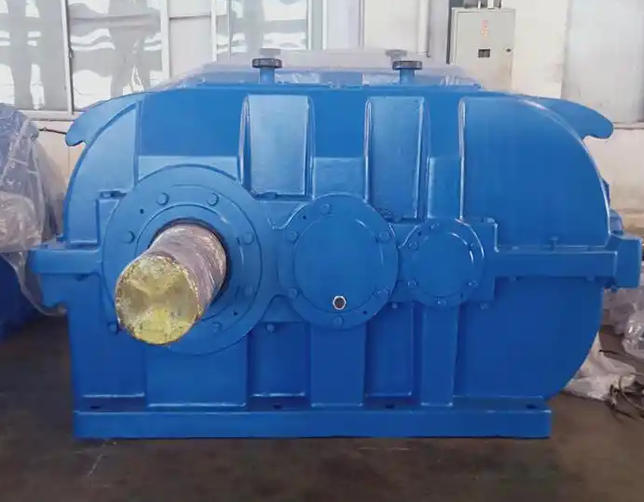
Having been deeply involved in the printing and dyeing industry for many years, I am well aware of the core pain points in the use of reducers in major factories: high temperature and high humidity, easy to break, continuous operation, difficulty in adapting to high-precision processes, chaos, high operation and maintenance costs, and serious waste of energy consumption. These problems have long plagued printing and dyeing enterprises, affecting production capacity, quality and profits. Directly attack the core pain points of the industry, provide targeted solutions, and completely solve the problem of reducer working condition adaptation at one time.
Pain point 1: Corrosive environment with high temperature and humidity, short equipment life and high failure rate. The printing and dyeing workshop has large amounts of water vapor, heavy acid and alkali mist, and high temperatures. Ordinary reducers are prone to corrosion, oil leakage, and aging of accessories. Solution: Abandon the ordinary general-purpose reducer and choose a special anti-corrosion seal model for printing and dyeing. It adopts a thickened cast iron shell, double-layer corrosion-resistant oil seal, and anti-emulsification lubrication configuration. It is specially adapted to harsh working conditions and is corrosion-resistant, high-temperature resistant, and anti-aging, greatly reducing the probability of failure.
Pain point two: 24-hour continuous operation, the equipment is not durable and requires frequent shutdowns for maintenance. The printing and dyeing production line operates in three shifts without a break. Ordinary reducers are prone to overheating, wear and precision degradation when running at full load for a long time. Solution: Prioritize the use of helical gear reducers and high-quality worm gear reducers. These models have a solid structure, are wear-resistant and heat-resistant, and support all-weather continuous heavy-load operation. The long-term lubrication design can reduce the frequency of oil changes and adapt to the uninterrupted production needs of the assembly line.
Pain point three: High-precision printing is inaccurate and the finished product defective rate is high. Ordinary reducers have large transmission gaps, jittery operation, and unstable precision, and cannot meet the needs of precision printing and dyeing processes. Solution: The high-end printing process is equipped with a precision right-angle reducer, a planetary reducer, and a closed-loop control system to achieve micron-level precision transmission, eliminate problems with offset offset and color registration, and greatly improve the final product qualification rate.
Pain point four: Selection is confusing, the machine model does not match the working conditions, and the energy consumption and loss are high. Many factories blindly purchase reducers and use large and small models indiscriminately, resulting in high energy consumption for small loads and insufficient power for large-load equipment. Solution: Accurate classification by processSelection, auxiliary worm gear reducers for light loads and small spaces, helical gears and precision planetary reducers for main drives, heavy loads, and high-precision working conditions, matching on demand to eliminate adaptation loopholes.
Pain point five: No standardized operation and maintenance, sudden failures, and high maintenance costs. Most factories do not have fixed maintenance procedures, and sudden equipment failures and shutdowns cause production delays and high maintenance costs. Solution: Implement a standardized periodic maintenance system, combine daily inspections, regular maintenance, and annual overhauls to identify hidden dangers in advance, replace maintenance with repairs, and reduce faults and operation and maintenance costs from the root cause.