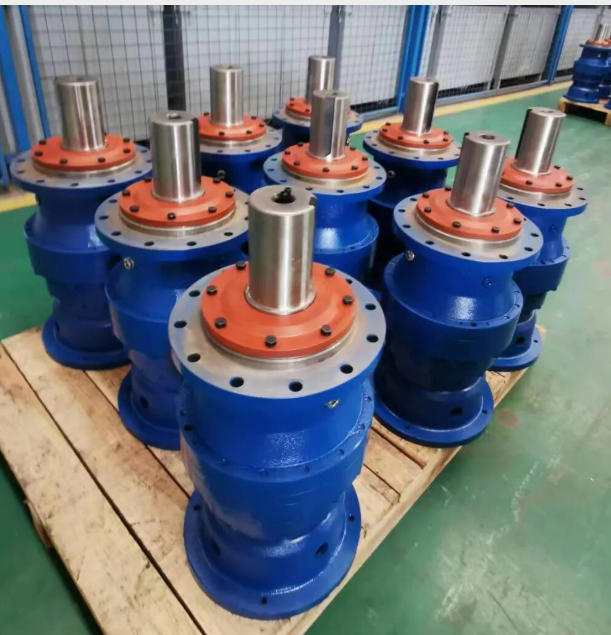
Gear reducer is the core device of industrial and mechanical transmission systems. It is commonly used between the prime mover and the working machine. It plays the role of matching the speed and transmitting torque between the prime mover and the working machine or the actuator. A complete gear reducer is composed of multiple highly integrated components with clear functions, relying on these components to jointly achieve the core functions of reducing speed, increasing torque, matching inertia and transmitting power.
So, what are the main structural components of the gear reducer? What roles do these components play?
01 gear
As the name suggests, the gear is the most important part of the gear reducer, responsible for transmitting torque and rotational speed. The design, material and processing accuracy of the gear directly determine the efficiency, noise, load-bearing capacity and life of the reducer. In the gear reducer, the teeth are in line contact with each other, and are severely worn during movement and need to withstand large impacts. Therefore, the gear needs to have a large surface hardness and a certain degree of toughness in the core.
Generally, gears are surface hardened to meet the mechanical performance requirements. Currently, the gears of gear reducers are commonly made of 20CrMnTi, 42CrMo and other alloy steels. After carburizing, quenching and gear grinding, the tooth surface hardness reaches HRC58-62, which can ensure wear resistance and fatigue resistance.
02 cabinet
The box is the "skeleton" of the gear reducer. It provides installation space for gears, shafts, bearings and other parts, holds lubricating oil, and installs and fixes all parts. The box needs to withstand external installation stress and provide a lubrication and heat dissipation environment.
The box body is generally made of cast iron. Cast iron is easy to manufacture, can have greater stiffness, and can absorb vibration and noise. With appropriate buffering measures, it can effectively avoid impacts that may cause breakage at the installation site.
03 axis
The shaft is the core part of the shaft system. All parts that perform rotary motion can only move after being installed on the shaft. The shaft is also the part in the reducer that installs gears and bearings and is connected to the power input device and actuator. It is responsible for transmitting torque and bearing the weight of the gear, and is mainly affected by torque and bending moment.
The shaft can be divided into an input shaft and an output shaft. The input shaft is connected to the motor or prime mover and receives high-speed rotational power; the output shaft is connected to the working machine (such as a drum, drill pipe, conveyor belt) and outputs low-speed and high-torque power. The material of the shaft is generally made of high-strength alloy steel, which has been quenched and tempered or surface hardened to have high torsional strength and fatigue life.