Author: Site Editor Publish Time: 19-01-2026 Origin: Site
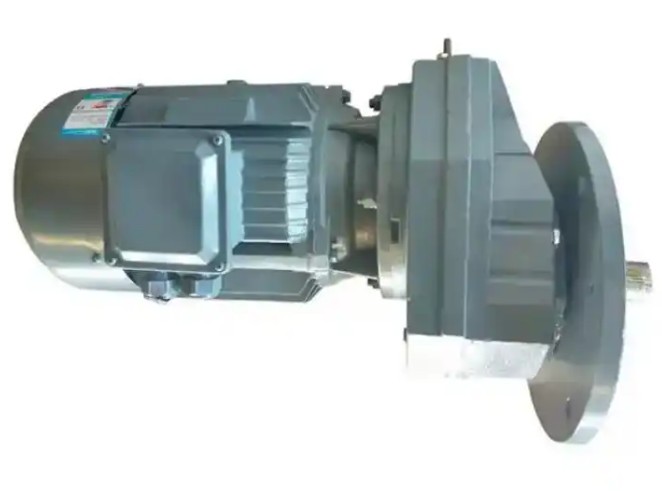
To determine whether the gear mesh of the RXF107-NA432-30KW-D350-M4 reducer is in good condition, it is necessary to combine two methods, static detection during shutdown and dynamic monitoring during operation, to comprehensively determine from the dimensions of tooth surface contact status, operating parameters, vibration and noise, etc. The specific steps are as follows:
1. Shutdown static detection (core judgment method)
1. Red red powder coloring detection method (the most intuitive)
(1) Clean the observation hole of the reducer to ensure that there is no oil stain or impurity on the gear surface;
(2) Evenly apply a thin and uniform layer of red red powder (or blue oil) on the tooth surface of the driving gear;
(3) Manually turn the car slowly for 3~5 turns to fully mesh the main and driven gears;
(4) Observe the contact traces on the tooth surface of the driven gear. The criteria for determining good meshing are:
The contact traces are distributed in the middle area of the tooth surface, with no upward, downward, left or right deviations;
Contact area: hard tooth surface gear ≥ 60%, soft tooth surface gear ≥ 70%;
The traces are continuous without interruption, and there are no obvious 'spot-like' or 'line-like' local contacts.
2. Tooth surface appearance and wear inspection
Open the observation hole or remove the end cover, and check the status of the tooth surface visually or with the help of a magnifying glass. The characteristics of the tooth surface with good meshing are:
No pitting, peeling, gluing, cracks, plastic deformation and other damages;
The tooth surface is smooth with no obvious scratches or metal debris attached;
There are no chipping or burrs on the tooth top or root, and there is no obvious wear and tear in the tooth thickness.
3. Check the status of shafting and bearings
Turn the input/output shaft by hand. The rotation should be smooth, without jamming, and without obvious loose feeling;
Detect the temperature of the bearing end cover (touch it after stopping the machine), and there is no local overheating;
Use a dial indicator to detect the radial runout of the shaft. The deviation must be ≤ the value specified in the equipment manual (usually ≤ 0.05mm).
2. Operation dynamic monitoring (auxiliary judgment method)
1. Noise monitoring
When the reducer is running with no load and rated load, use a decibel meter to measure the surface noise of the box. The noise standard for good meshing is:
No-load operating noise ≤75dB (A), rated load operating noise ≤85dB (A) (specifically, please refer to the manufacturer's manual);
The noise is uniform and there are no obvious periodic abnormal sounds (such as 'thump, thump' impact sounds and sharp whistling sounds).
Various fault problems caused by assembly accuracy deviation of R87-23.40-5.5KW gear reducer
B2SH Adjustment and Optimization Methods for Uneven Distribution of Gearbox Meshing Load
What should you pay attention to when verifying the FA series gear reducer with load?
NGW-L11-5.6 Preventive methods for base settlement and cracking of planetary reducer
How to detect whether the output shaft is damaged when installing DCY160 gear reducer
Analysis on the Necessity of Output Shaft Damage Inspection before Installation of DCY200 Reducer
How to accurately solve the problems of vibration, jitter and unstable speed of loom reducer
Optimize the operation and maintenance of loom reducer to reduce downtime losses
Can the FAF67-4.21-4KW reducer cooling fan operate normally?
How to choose seals for TY115-18-7.5KW hard tooth surface reducer
WS280-63-4F worm gear reducer maintenance cycle and maintenance precautions
NGW-L112-71 planetary reducer base reinforcement and load-bearing enhancement measures
How to check and adjust the worm gear meshing state of WPWA155-50-B reducer?
Hard tooth surface reducer vs soft tooth surface reducer: how to set the lubrication cycle
What instruments are used to detect the vibration of the NGW61-3.15 planetary gear reducer base?