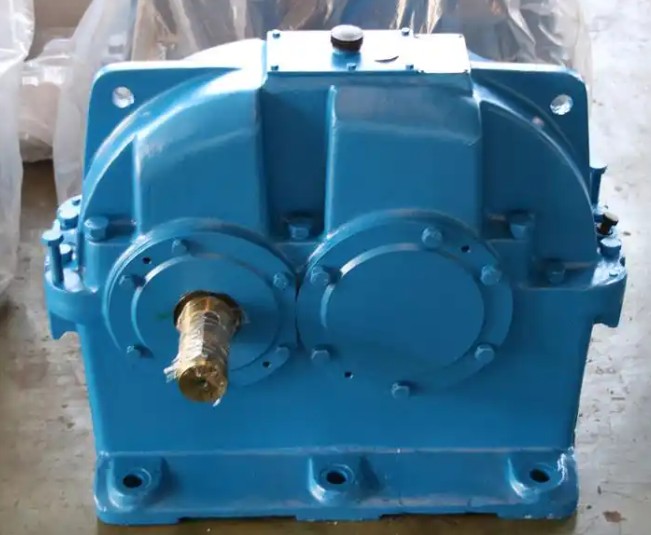
The installation quality of the CWU280-20 worm gear reducer directly affects its transmission accuracy, operating stability and service life. The core of correct installation is to ensure that the transmission is centered, firmly fixed, lubricated in place, and to avoid interference from external loads. The following are specific precautions, classified according to the installation process:
1. Preparation before installation: inspection and environmental confirmation
Before formal assembly, basic inspection and environmental assessment must be completed to eliminate potential risks.
Check the status of the reducer : Confirm that there is no damage during transportation, the output shaft rotates flexibly, and there is no jamming or abnormal noise.
Check matching dimensions : Measure the input shaft diameter, output shaft diameter, keyway size and tolerance to ensure matching with the prime mover (such as motor) and load-side coupling to avoid being too tight or too loose.
Confirm the installation position : Prioritize installation on a horizontal and stable foundation surface and avoid vertical installation; if vertical installation is necessary, lubrication management must be strengthened and oil leakage must be prevented.
Check ventilation and operating space : Make sure there is enough space around the motor fan for heat dissipation, and that maintenance points such as oil level plugs, breather plugs, and oil drain plugs are easily accessible.
2. Transmission alignment: the key to ensuring smooth operation
The alignment accuracy between the input shaft and the prime mover, and the output shaft and the load is crucial.
Control coaxiality error : The radial deviation between the motor output shaft and the reducer input shaft should be less than the allowable compensation amount of the coupling, usually no more than 0.1mm.
Avoid forced assembly : If a coupling is used for connection, it is prohibited to use hammering to force the installation. It is recommended to use an assembly fixture or use the internal thread of the end shaft to press in the bolt.
Choose flexible couplings : Avoid using rigid fixed couplings and recommend elastic pins or plum blossom couplings to absorb small deflections and vibrations.
3. Fixation and support: prevent vibration and looseness
Stable installation is a prerequisite for long-term reliable operation.
The foundation must be solid : Install the reducer firmly on a flat, rigid base or frame to prevent resonance or displacement during operation.
Reliable locking of fasteners : All anchor bolts should be tightened gradually in diagonal order, and spring washers or anti-loosening glue should be installed and checked regularly to see if they are loose.
Large motors require support : If the motor is heavy, an auxiliary support frame should be installed at the tail of the motor to prevent the input end of the reducer from bearing additional bending moments.
4. Lubrication system settings: ensure effective initial lubrication
Correct lubrication is the core link in protecting the worm gear pair.
Preparation before refueling for the first time : Remove the oil pool vent screw plug and replace it with the vent cap to ensure that the air pressure inside and outside the box is balanced.
Control the oil level : The lubricating oil should submerge the worm gear tooth root, but not exceed the worm axis, specifically based on the center line of the oil sight window; the oil injection volume of the CWU280 model is approximately 1.2–1.8L.
Choose special lubricating oil : It is recommended to use L-CKE/P series worm gear oil. The viscosity grade is ISO VG 320 (medium load) or 460 (heavy load) according to the working conditions.
It is forbidden to mix different oil products : To prevent the deterioration of lubrication performance caused by the failure of additives.