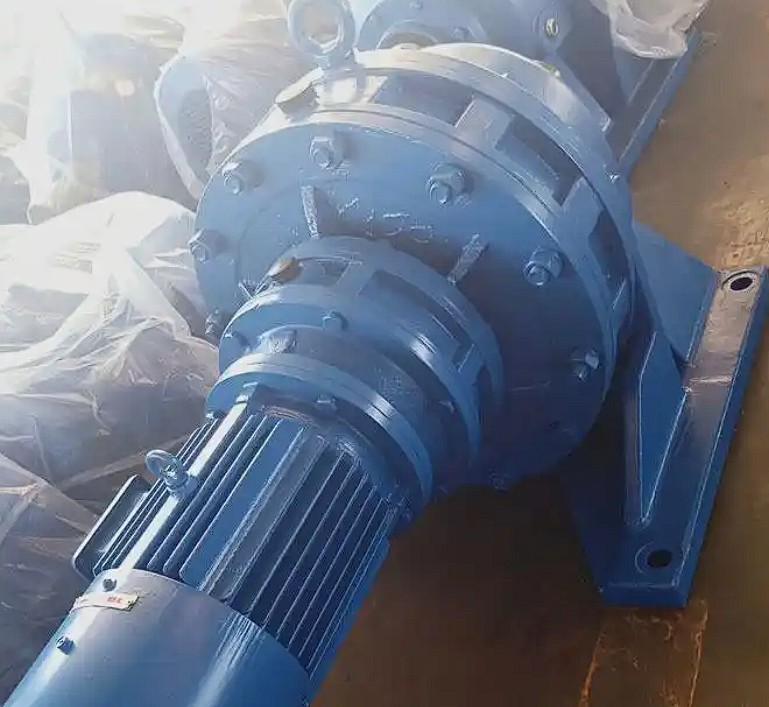
Many factory and logistics practitioners come into contact with conveyor equipment every day, but they know little about the core component reducer. In fact, the conveyor reducer is the "power converter" of the entire conveyor line. It may seem inconspicuous, but it directly determines the operation stability, load capacity and service life of the equipment. Today, we will use the vernacular to fully understand the core principles and functions of conveyor reducers.
To put it simply, the motor outputs high-speed, low-torque power when working. The speed is fast but it cannot carry heavy-load materials. Conveyor operations require stable power with low speed and high torque. The core function of the reducer is to reduce the motor speed and amplify the output torque, while buffering the impact of equipment operation and balancing the transmission load.
Its working principle is not complicated. It relies on internal gear sets, worm gears and other transmission structures to change the power output speed and torque through multi-stage gear meshing transmission. In various conveyors such as belts, rollers, screws, and chains, the reducer accurately matches the operating speed of the equipment to prevent the motor from idling at high speed and burning due to overload, while reducing vibration and noise when the equipment starts and stops.
In addition, conveyor reducers also have two key functions. The first is to adapt to working conditions. Different conveying distances, loads, and material types require different speeds and torques. The reducer can flexibly adjust the power parameters to adapt to various production scenarios; the second is to protect the equipment and isolate the direct stress between the motor and the conveyed load to avoid motor damage caused by material overload and jamming, greatly reducing the equipment failure rate.
All in all, the reducer is the core power of the conveyor. Without a suitable reducer, no matter how high-quality the motor and conveyor frame are, it will not be able to operate stably. Only by understanding its working principle can you do follow-up maintenance and troubleshooting.